Owners report it
Spot rat bait, algae or an adder? Pick what it is, drop a pin on the spot, add a note. It takes a few taps.

Rat bait in the park, blue-green algae on the lake, an adder by the stile. Owners nearby report what they see, it goes on your map, and you get an alert when it’s close. Free in the Wandr app.


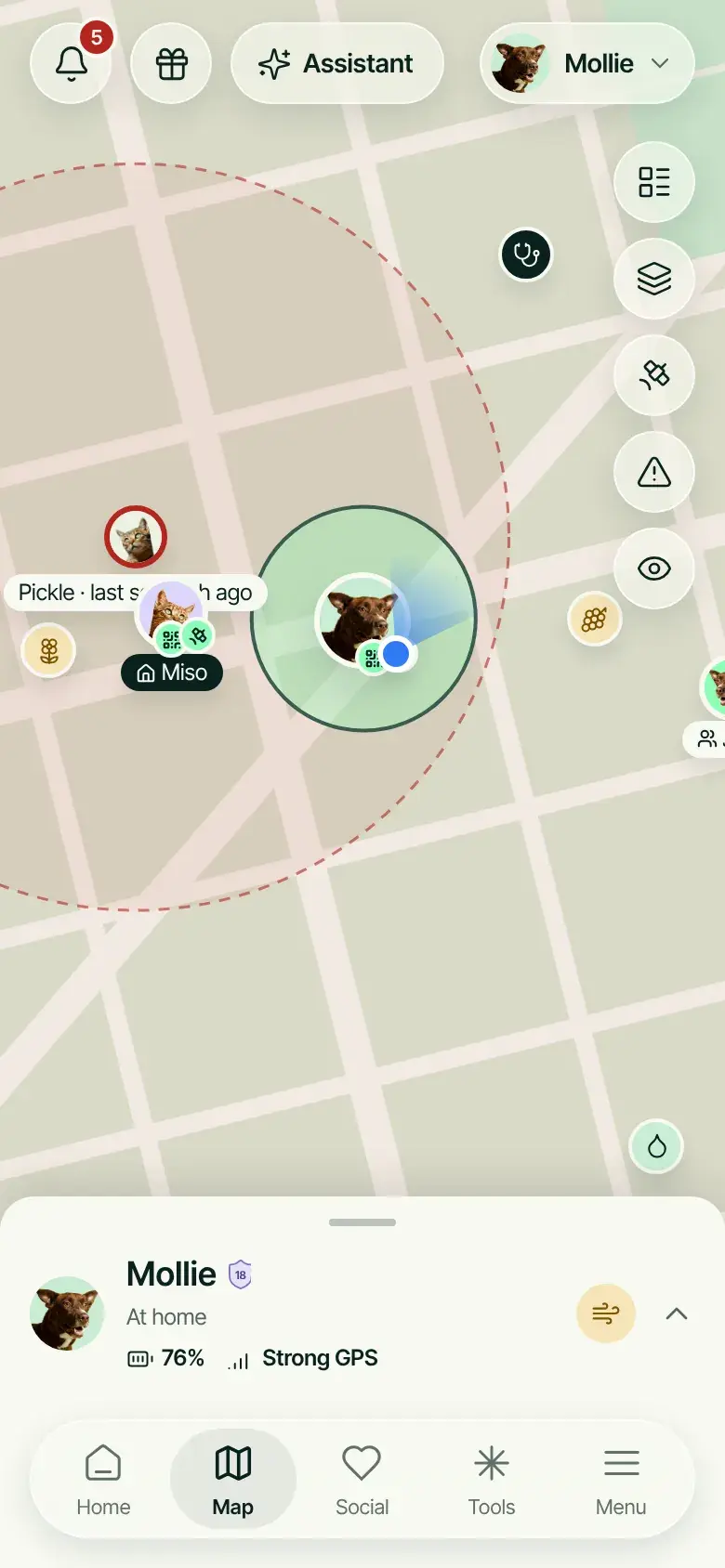
The people who walk the same paths as you are the first to spot what’s changed. Hazard alerts put what they see on your map.
Spot rat bait, algae or an adder? Pick what it is, drop a pin on the spot, add a note. It takes a few taps.
Everyone nearby sees it on the map and in the list, with what it is, how long ago it was seen and what to do.
Turn on hazard alerts and you hear about one near you, before you set off.
Owners nearby confirm it’s still there or mark it gone. Unconfirmed reports expire on their own.
Most of what can hurt a dog on a walk comes and goes with the seasons. This is what owners tend to report, and when. The hazards below are the ones you can report in the app, chosen from UK poisoning and injury data from vets and animal charities.
| Spring | Toads on paths, adders waking on warm days, ticks back in long grass, and daffodil and tulip bulbs dug up. |
|---|---|
| Summer | Blue-green algae, adders, processionary caterpillars, wasp nests, grass seeds, jellyfish, and heat. |
| Autumn | Mushrooms, conkers and acorns, Alabama rot season starting, and fireworks. |
| Winter | Antifreeze, rock salt, thin ice, rivers in flood, and wax or palm oil washed up after storms. |
The reports that matter most. Some of these kill in small amounts, so for every one the advice is the same: call a vet straight away.
A scum or bloom on lakes, ponds and slow rivers, mostly in warm, still weather from late spring to autumn. Some blooms are toxic enough to kill a dog that swims in or drinks the water.
Listed in the app with whatever’s in season first, so adders lead in spring and summer.
Mostly seasonal, and mostly a problem for dogs that chew and cats that groom.
The hazards that injure rather than poison.
Three that come and go with the calendar.
Chocolate, chewing gum and sugar-free sweets (xylitol), grapes and raisins, pills, mouldy food or a spilled bin, cooked bones and takeaway leftovers. Each clears from the map in a day to three days, and the advice for all of them is to call a vet if your dog eats some.
Heat isn’t a pin on the map: it’s everywhere at once. Instead, the app checks the forecast for the next 24 hours where you are and warns you before weather that’s risky for a walk, saying when to stay in and when to go instead. You can check the walking weather where you are now, too, or look for dog walks near you.
Cats roam where we don’t walk, so a few hazards matter more for them. Lilies and antifreeze are the two to know: both can kill a cat in tiny amounts, and both are marked as a danger to cats on a cat owner’s map. If your cat goes out, a GPS cat tracker shows you where they roam, so you know which hazards are on their patch.
If you’re ever worried your pet has eaten or touched something, call your vet. Don’t wait for signs, and don’t make them sick unless a vet tells you to.
Yes. The map of hazards, reporting one and alerts near you are all in the free Wandr app. You don’t need a tag or a tracker.
It depends on what it is: an adder report lasts 24 hours, ticks and blue-green algae 7 days, rat poison and wasp nests 14 days. Each time someone nearby confirms it’s still there, it starts again. Two owners marking it gone takes it off the map.
Anyone within 150 metres of it, so the people saying it’s there or gone have seen the spot. You can’t confirm your own report.
No. The report shows where the hazard is, not who reported it or where they live.
Call your vet straight away, even if your dog seems fine: with antifreeze, rat poison and xylitol, signs can take hours or days to show. Take the packet or a photo if you can. Don’t make your dog sick unless a vet tells you to.
Yes. On a cat owner’s map, hazards that are a particular danger to cats are marked, such as lilies and antifreeze.
Get started today with a tag, and access a community that are here to support you.