Live on the map
Open the app and see where they are now, then follow them as they move until you’ve caught up.

The Wandr GPS tracker clips onto your dog’s collar and shows them live on the map in the free Wandr app. Safe zone alerts, up to 15 days a charge, 32g and waterproof. £59, with a free PawTag™ in the box.
Live tracking runs on Care: £4.99 a month, or £3.42 a month paid yearly in the app. Start it on our website and your first 30 days are free.
Open the app and see where they are now, then follow them as they move until you’ve caught up.
Draw zones around home or the garden. You get an alert the moment they leave, and again when they’re back.
Close but can’t see them? Make the tracker ring and flash from the app, in the dark or in long grass.
Put them in Lost mode and pet owners nearby get their photo and last known location.
A GPS dog tracker does two jobs. First it works out where it is, by listening to satellites overhead. Then it sends that location over the mobile network to an app on your phone. Both halves matter: the satellites are what make it accurate, and the mobile connection is what lets you see your dog from anywhere, whether they’re two fields away or two miles.
The Wandr tracker listens to four satellite systems at once (GPS, GLONASS, Galileo and BeiDou), which helps it get a fix quickly and hold it in woods and between buildings. Indoors, where satellites can’t reach, it uses nearby Wi-Fi and mobile masts to place your dog instead. It then reports over 4G (LTE Cat 1), using the SIM that’s built in, so there’s nothing for you to set up.
Day to day it reports now and then to save battery. When you need it, switch to live tracking and the map follows them as they move, so you can walk straight to them.
A GPS dog collar is a collar with the tracker built into it. A clip-on tracker, like Wandr’s, fixes to the collar your dog already wears. Both find your dog the same way. The difference is what happens later: a clip-on tracker moves to a new collar when your puppy outgrows theirs, or when a muddy collar needs replacing, without buying a new tracker.
Whichever you choose, fit matters more than the tracker. You should be able to slide two fingers under the collar and no more. A loose collar can be slipped over the head, tracker and all.
Every GPS dog tracker needs charging. It’s the trade-off for seeing your dog live. What matters is how often, and whether you know before it runs out.
A good habit: charge it on the same evening each week, like your own watch. And because every Wandr tracker comes with a PawTag™, your dog still carries a way home on the rare day the battery does run out.
Out in the open, satellite positioning places your dog to within about 10 metres. Accuracy drops a little under thick trees, between tall buildings and indoors, which is why the tracker also uses Wi-Fi and mobile masts there.
The other half is the mobile signal. Your dog’s location reaches you over 4G, so it needs coverage where they are. That’s rarely a problem in towns and on most walks, but deep valleys and some remote hills have gaps. If your dog runs into one, the map keeps their last known location until they’re back in coverage. Honest advice: if you walk in very remote country, check the coverage maps before you go, and keep the PawTag™ on their collar too.
The tracker knows more than where your dog is. It also counts how active they’ve been, how long they’ve slept, how many walks they’ve had and how far they’ve gone, and the app shows you today’s numbers alongside where they are.
Each week you get a short summary of the last seven days against the seven before: 20% more active, 23 minutes less sleep, one walk fewer. A dog who’s suddenly sleeping more or moving less can be the first sign something’s up, and it’s useful to have the numbers to hand when you talk to your vet. And if they just need more exercise, the app has off-lead and circular dog walks near you. We compare the options in the best dog activity trackers in the UK.
“Dog GPS tracker no subscription” is one of the most searched questions about trackers, so here’s the straight answer. A tracker that can show you your dog at any distance has a SIM inside it, and that SIM uses mobile data every time it reports. Someone has to pay for that data. Usually you pay it as a plan. A few makers pay it for you and build the cost into a higher price up front, often with fewer features.
Most trackers with no plan at all, like Apple AirTag, don’t use GPS or a SIM. They work over Bluetooth, which we cover below. We go deeper on the options in is there a dog tracker without a subscription?
With Wandr, the plan is called Care: £4.99 a month, or £40.99 a year in the app (£3.42 a month). It covers live tracking, safe zones, and finding them by sound and light. Start it on our website and the first 30 days are free, and you can cancel any time. If you do, the PawTag™ keeps working and costs nothing. See pricing for the details.
AirTags are small, cheap and have no subscription, so it’s fair to ask. The difference is how they find their way back to you. An AirTag has no GPS and no SIM: it’s only located when an iPhone passes within Bluetooth range of it. In a busy street that can be often. On a hillside, in a wood or in the middle of the night, there may be no iPhone nearby at all, and so no location. Apple also designed AirTag for keys and bags, not for pets.
A GPS tracker reports for itself, wherever there’s a mobile signal, without relying on anyone walking past. If your dog is the kind to vanish after a deer, that’s the difference that matters.
They do different jobs, which is why the Wandr GPS tracker comes with a free PawTag™. The tracker tells you where your dog is. The PawTag™ tells whoever finds them who they belong to: one scan with a phone camera opens their profile and lets the finder reach you. It has no battery, so it works even if the tracker’s battery or signal doesn’t.
If your dog never strays and you just want a way home if they’re ever found, the free PawTag™ on its own may be enough. If they’re an escape artist, a roamer or off the lead in big open spaces, you’ll want both.
The same tracker works for cats. At 32g it suits grown cats, on a quick-release (breakaway) collar so they can pull free if it catches on something. Collars, where cats roam and what a microchip can and can’t do are all in our GPS cat tracker guide.
Whichever tracker you choose, these are the questions worth asking:
We compare the popular UK trackers, Wandr included, in the best dog trackers in the UK.
| Battery | Up to 15 days a charge (700mAh, rechargeable) |
|---|---|
| Weight | 32g |
| Waterproof | IP67: rain, puddles and a dip in the river |
| Connection | 4G (LTE Cat 1) mobile network, SIM built in |
| Location from | GPS, GLONASS, Galileo and BeiDou satellites, plus nearby Wi-Fi and mobile masts |
| Works with | The free Wandr app on iPhone and Android |
| In the box | The GPS tracker and a free PawTag™ |
| Price | £59 with free delivery, then Care from £3.42 a month for live tracking |
The GPS tracker shows you where they are. The free PawTag™ that comes with it lets anyone who finds them reach you.
| Compared | 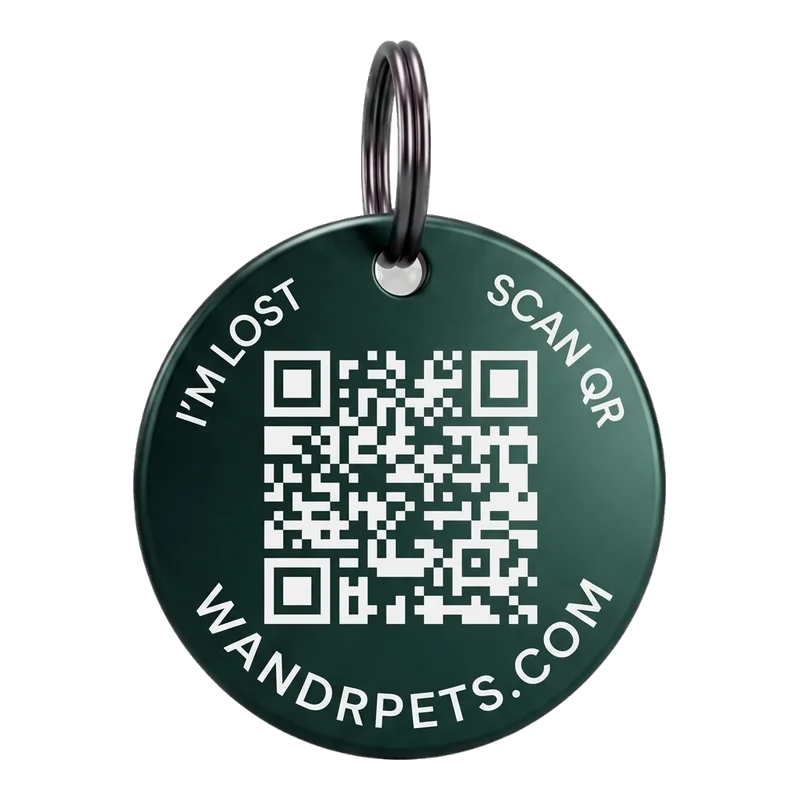 Wandr PawTag™Free, just pay delivery | 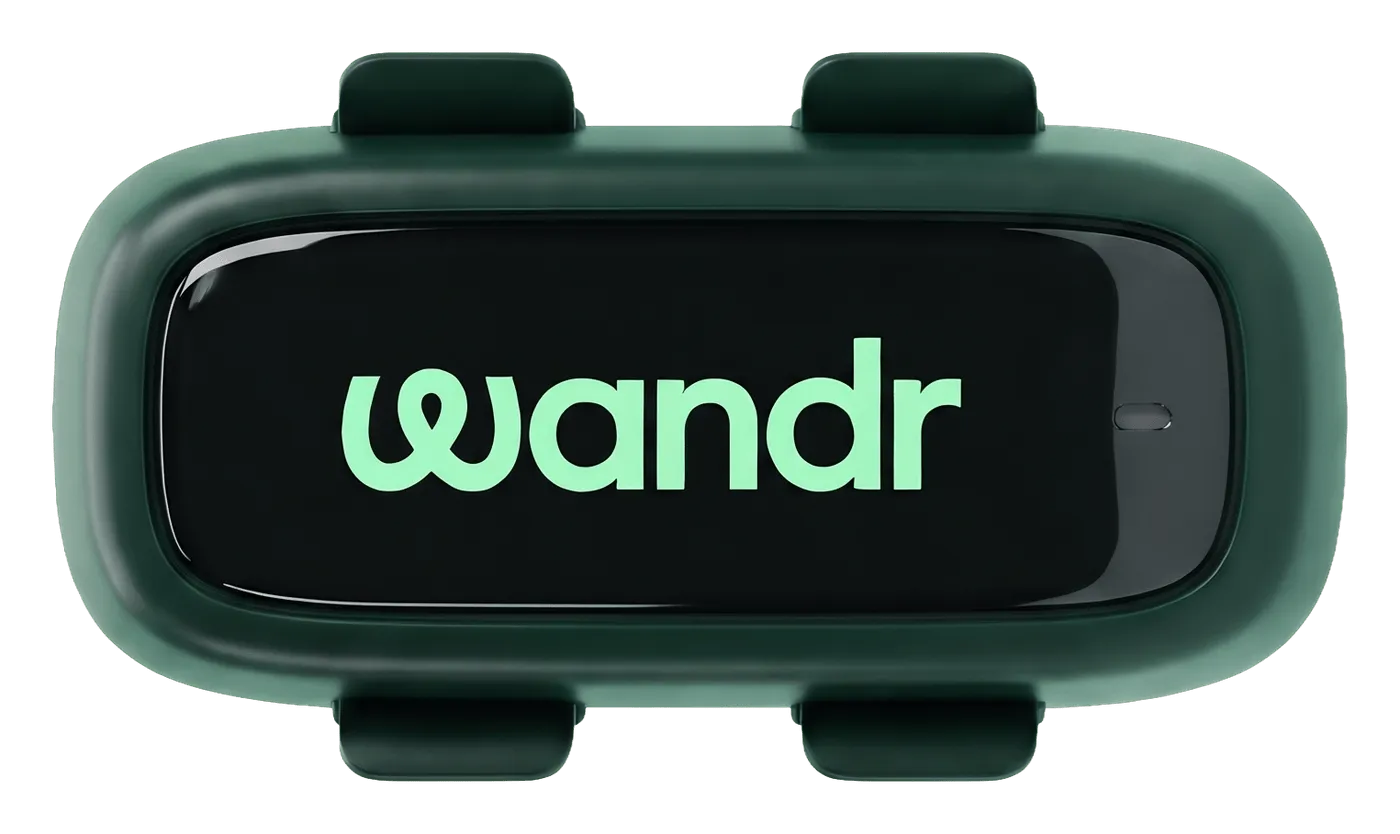 Wandr GPS tracker£59, free PawTag™ included |
|---|---|---|
| A finder can reach you | With a scan, no app needed | With the free PawTag™ |
| Where they are right now | Where each scan happened | Live on the map |
| Alert owners nearby when they’re lost | Free, with Lost mode | Free, with Lost mode |
| Safe zone alerts | Not included | When they leave or arrive |
| Find them by sound and light | Not included | With a tap in the app |
| Activity and sleep monitoring | Not included | Every day |
| Charging | No battery, never charge it | Rechargeable (up to 15 days battery) |
| Suitable for dogs and cats | Dogs and cats | Dogs and cats |
| Ongoing cost | None, no subscription | Care, from £3.42 a month |
It works out where it is from satellites, then sends that location over the mobile network to an app on your phone. That’s why it needs a SIM and a data plan, and why it works at any distance, unlike Bluetooth tags.
Up to 15 days on one charge in power-saving mode. Following them live uses more, so charge it after a long search. The app tells you when it’s running low.
A few, but the data still has to be paid for. A tracker that sends its location over the mobile network uses data every time it reports, so either you pay a plan, or the maker pays it and charges more for the tracker up front. Bluetooth tags like AirTag have no subscription, but they only work when a phone passes close by.
£59 with free delivery, plus Care for live tracking: £4.99 a month, or £40.99 a year in the app, which works out at £3.42 a month. A free PawTag™ comes in the box.
Yes. It’s rated IP67, so rain, muddy puddles and a swim won’t hurt it. Dry it before you charge it.
Yes. At 32g it suits grown cats. Always use a quick-release (breakaway) collar for a cat, and ask your vet if your cat is small.
If there’s no mobile signal where your dog is, the tracker can’t send its location until it’s back in coverage. Your last known location stays on the map, and the PawTag™ still lets anyone who finds them reach you.
Live tracking stops at the end of your billing period. The PawTag™ keeps working and their profile stays, so a finder can still get in touch.
Get started today with a tag, and access a community that are here to support you.